And how likely they are to happen
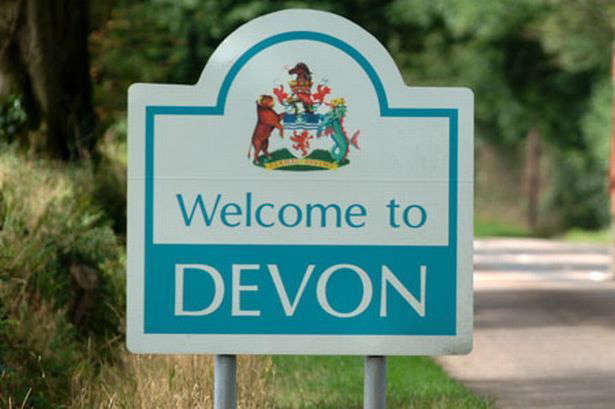
There’s no doubt 2026 is shaping up to be a big year for Devon in terms of the county’s political future.
Chief among the year’s likely or potential developments is the very make-up of how the county’s public services are delivered.
The phrase ‘local government reorganisation’ might not get many people particularly excited, but when the amalgamation and subsequent eradication of various councils could impact how quickly your child with special needs gets their education, health and care plan (EHCP), how frequently your waste and recycling is collected, the quality of social care for your elderly relative, or how important repairing potholes is viewed, then it all starts to matter that little bit more.
Devon’s councils have, collectively, submitted a range of proposals for how they think Devon’s political map should be redrawn, and it’s likely the government will announce its preferred option this year.
Whatever the outcome, the current two-tier system, whereby the county council oversees some services but others within the same boundary are the responsibility of districts, will be abolished and replaced with unitary councils that look after all services under one roof.
Besides this, there’s the potential for Devon to be given the go-ahead to elect a mayor, one major election could be postponed, and Reform could bag its first seats on a major council.
Here we look at these events more closely and assess how likely they are to happen.
The starter gun is fired in the race for Devon mayor
A major part of Westminster’s shake-up plans for local government rest on the idea of directly elected mayors.
These individuals would sit above one or more of the newly formed unitary councils and be responsible for broader aspects, such as transport and housing. Any mayor would be focused on these areas at a much higher level, deciding housing strategy on a more comprehensive basis rather than individual planning applications, and considering transport policy for the whole area rather than lobbying for an extra service on the number 72 bus.
The prospects in 2026 for Devon being given the go-ahead to elect a mayor are a little cloudy; other areas of England which have been told how their councils should be reorganised – like Surrey – were also expecting to be told they could proceed with securing a mayor, but the government has so far not confirmed they can.
Devon could have an ace card up its sleeve though, because of the Devon Torbay Combined County Authority (DTCCA).
This organisation, that arguably has some of the strategic oversight of a mayor, officially came into being around the time the government announced it wanted to overhaul local councils, and at the time, even some of its supporters thought it could quickly become redundant.
But with mayors on the horizon, the DTCCA could end up being a route through which Devon secures a mayor more quickly than some of its peers.
Verdict: 6/10 – While there are increasingly loud noises for Devon to be allowed to quickly kickstart the process for securing a mayor, the government is the ultimate arbiter of whether this happens or not. And its intransigence with letting other areas progress suggests it might not let Devon go ahead of others.
Reform gains first seats in Plymouth
The scale of Reform UK’s entry into the Devon political scene surprised many, possibly even some of the party members themselves.
The party failed to secure any MPs in the county in the 2024 general election, but when voters were asked to decide the political fate of Devon County Council, Reform UK surged from zero seats to 18, becoming the second-biggest party at County Hall.
While it has since had two defections away from it, the prospect of the party gaining its first councillor in another Devon council seems highly likely.
Plymouth will be holding elections this year for a third of its seats; that means given Labour holds 39 of the 57 seats, even a major upset is unlikely to mean it will lose control.
But the scale of Reform’s presence if it does gain seats will no doubt cause lots of debate.
Verdict: 9/10: Plymouth has confirmed its elections will be held as planned in 2026, and given Reform’s surge in the county council elections this year, it seems likely they’ll also gain a presence in Plymouth’s chamber too. Seats here are potentially more prized than other councils at the moment, too, because Plymouth looks likely to be the only Devon council that won’t undergo any change as a result of local government reorganisation.
Torbay gets abolished
Amid the forthcoming local government shake-up, there is a possibility that one of Devon’s two existing unitary councils gets abolished.
While some plans – such as that of Devon County Council – propose letting Torbay remain, others – including the so-called 4-5-1 proposal – envisage it being merged with some of its neighbours to create a new unitary council.
Torbay was created relatively early in the unitary story, securing the status in 1998 just three years after the first council – the Isle of Wight – gained it.
There are now 62 unitary councils in England, which excludes London and the metropolitan cities. This number will inevitably rise once the government eradicates the two-tier system that exists in 21 areas of the country now.
While Torbay is one of the smallest unitary councils in England, some local government insiders have pointed to the disproportionate amount of funding it gets from the NHS compared to other councils.
Scrapping Torbay as a council could risk that funding, some suggest, which may provide it a defence against abolition.
Verdict: 5/10: It’s arguably 50/50 as to whether Torbay continues to exist post-local government reorganisation. With some proposals advocating its protection and others suggesting it be merged away, only the government can decide its fate.
Exeter postpones its elections
At the end of 2025, the government suggested that areas where voters were due to head to polling stations in 2026 may be able to delay those elections.
The rationale behind this relates to local government reorganisation – notionally that Westminster thinks councils will have enough on their plates working out how to merge with neighbours or shut themselves down without also having to run an election.
Plymouth was quick to declare it would maintain its electoral timetable, but Exeter appeared to be sat on the fence – or at least wanted the quiet of Christmas to consider its potential moves.
When the former Conservative administration in Devon County Council tried to take up a similar invite at the end of 2024, it was roundly criticised for exploring the possibility.
The elections went ahead in 2025, resulting in the Conservatives falling from 40 of the 60 seats at County Hall to seven.
At the time of writing (Friday 2 January), it isn’t clear what Exeter will decide, but it doesn’t have long, as the government wants to know by 15 January.
Verdict: 3/10: Although the option of postponing elections has been suggested by the government rather than emerging from Exeter itself, it would be a significant step for any council to accept. Even with the legitimate excuse of resources being stretched while councils deal with local government reorganisation, denying voters the opportunity to go to a planned election could prove controversial. Postponing elections in 2027 could be less controversial, because voters will likely need to go to the polls that year to choose councillors for the new unitary councils that will come into force in 2028.
 Pothole reports in Plymouth triple
 Electric cars add to hazards in busy Paignton street
 Armada Way revamp will be shining light at end of tunnel
 Devon pothole numbers skyrocket
 Calls for Torbay to rethink 'Blue Flag' exit
 Parking charges to increase in Cornwall Council car parks