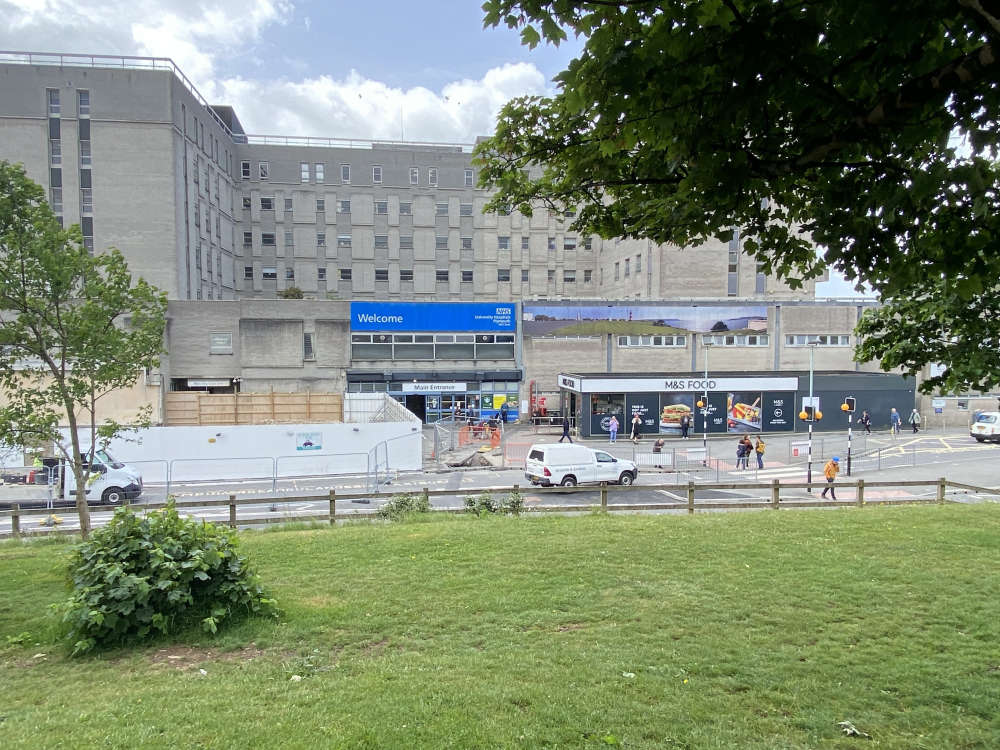
Patients and doctors will see all records by logging in
A fully digital patient record system is being rolled out in Plymouth which is expected to transform the way the health service is delivered, how it operates and how patients get their information.
University Hospitals Plymouth NHS Trust is transforming from a paper-based hospital with many different systems across departments to a digital one where all records are stored in one place for access by patients, hospital departments, consultants and GPs.
Patients will just have to log in through an app on their phone or desktop to access the patient portal My Care where they will be able to see the results of their tests, medications and book appointments.
Plymouth City Council’s health and adult social care scrutiny panel heard on Wednesday that the new electronic patient record (EPR) system by American healthcare-focused software company EPIC had been implemented by the Royal Devon University Healthcare NHS Foundation Trust in 2020 and Torbay and South Devon NHS Foundation Trust would be coming online at Easter.
It means that all patient records in Devon will be brought together across the three partners.
Deputy chief executive at University Hospitals Plymouth Sarah Brampton told councillors that the system would go live in July and she was really excited about it.
“It will transform the way we are able to deliver health services in Plymouth. We will go from a paper-based hospital to fully digital.
“Records will all be in one place and be seen by GPs, by patients through an app of their phone, different departments and consultants will be able to see scans and blood test results.
“It will transform the way we can deliver services for our patients and the way we work.”
She said there were a lot of systems on the market and EPIC was “one of the better ones” which had a strong foothold in the UK with UCL London, Cambridge, the Royal Marsden and Guys Hospital all using it.
But Cllr Lauren McLay (Green, Plympton Chaddlewood) said she was “gravely concerned” about inviting an American private profit-driven company which makes five billion dollars annually into something as sensitive as patient records.
The company was currently engaged in an active lawsuit in California as 300,000 patient files were accessed by third parties without patients’ consent or knowledge, she said.
“I am concerned about the UK’s digital sovereignty and national security, particularly when cyber attacks are becoming more common, because we are inviting private interests into public health,” she said.
Sarah Brampton said this had always been at the forefront of their minds and they had looked at in-house solutions, but there were “tens and tens” of different systems and bespoke systems which did not have the capacity of technology for what they needed to do going forward.
“We believe they (EPIC) have the strongest data security system available to us. We have a very robust group within the UK made up of senior offices that have implemented EPIC on hospital sites and work closely to put in strict governance processes so no-one else can access data other than ourselves.
“It is under constant review. We can never eliminate the possibility of cyber attacks but by buying into this growing UK group we are strengthening awareness and resilience of cyber attacks, all we can do is keep training our users and making sure we are as robust as possible.”.
Cllr Angela Penrose (Lab, Compton) claimed there was “chaos” in some of Plymouth’s healthcare systems and wanted reassurance that the EPR would work across hospitals.
She was told that the testing had been done across Exeter and Barnstaple hospitals and there had been a year-long programme of work to prepare Plymouth.
Clinical information officer Sally King said 13 per cent of staff would be “super users” and Plymouth was “really lucky to be part of a county that already had it”.
Torbay would go live over the Easter weekend and would help Plymouth in July.
“We will be flooded with people who have already gone through this to help us. It will be a really tight run operation and feels like a very robust process,” she said.
The meeting was told that sensitive information such indications of cancer would not be shared on My Care immediately and could be delayed by up to 42 days for doctors to talk to patients.
Other things like routine blood tests would be available immediately.
Patients will have a choice whether to use My Care and can still receive information in the way they always have if they wish.
There will be communications campaigns in the coming months to keep people informed of the new EPR system.
 Arrests made and illegal items seized in drug crackdown
 New electric buses launched
 £3 million boost to thwart road damage in Devon
 Torbay will leave Blue Flag beaches scheme
 Violence in schools 'more prevalent'
 Hair raid thugs sought