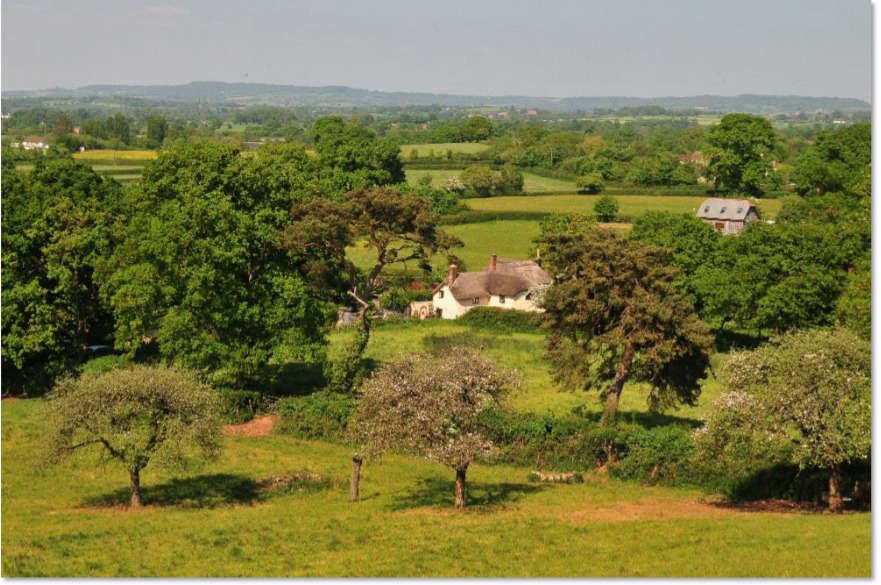
East Devon's scrutiny committee will look again
Critics of a decision to set up a £1 million fund for a vital Devon nature reserve have forced a Devon council to reconsider the move.
A total of £1.1 million was secured to help set up a 10 hectare country park in East Devon, with the idea being that the cash would be invested and the returns used to support annual maintenance costs.
The initial lump sum was set to come from a pot of cash built-up by East Devon District Council from contributions it receives from housing developers who have secured planning permissions.
But a group of five councillors have forced a so-called call-in of the decision, meaning the council’s scrutiny committee will revisit it, and potentially propose a new recommendation for the council’s cabinet to consider.
The rationale behind the call-in – led by the chair of the scrutiny committee, Councillor Mike Goodman (Conservative, Sidmouth Sidford) – relates to queries about the strength of the decision to support the £1.1 million funding and whether other uses could be found.
The call-in request states the cabinet decision to propose the funding was “split”, with two members voting for it, two voting against, and the chair “using a casting vote to approve the decision”.
“Concerns were raised that spending this money does not represent good value for East Devon District Council,” the report prepared for the scrutiny committee states.
“The item was initially considered by the Community Infrastructure Levy (CIL) group, where a request for £2 million was rejected.
“The revised request of £1.1m is still considered an expensive way to use capital sums to finance a park. There are other more urgent infrastructure projects that could benefit from this funding.”
The nature reserve – officially called a Suitable Alternative Natural Green Space or SANG – will deliver a 10 hectare country park as part of efforts to mitigate the vast amount of housebuilding that has already taken place in the western part of East Devon and will do in the coming years through the second new town, Marlcombe.
It will include the Clyst Valley regional park and also a major cycle link.
Rules from Natural England mean a SANG must meet certain requirements, with one of those being that it is maintained “in perpetuity”, meaning for 80-100 years.
The idea behind investing the £1.1 million now, would be that the lump sum would produce a return that would partly or wholly cover the annual costs of maintaining the green space.
Crucially, if a SANG is not managed in perpetuity, the council claims Natural England could “block the development of further housing within the district” and “and the council would be at risk of legal challenge from third parties for failing to meet our mitigation requirements”.
While East Devon had a £12 million pot of developer contributions when the idea of the investment pot first arose, it had received bids totalling £17 million for the cash, meaning if the initial £2 million request for the nature reserve been approved, the situation for the council “would have been significantly more difficult”.
An alternative idea of agreeing £40,000 per year for three years had also been mooted, but over 80 years that would cost the council more money than even the £2 million lump sum now, and with local government reorganisation in full swing, there is no guarantee a new council will continue the same level of funding beyond 2028.
The scrutiny committee will meet next week (Thursday 8 January) and could refer the decision back to cabinet for reconsideration or take no further action.
 Pothole reports in Plymouth triple
 Electric cars add to hazards in busy Paignton street
 Devon pothole numbers skyrocket
 Calls for Torbay to rethink 'Blue Flag' exit
 Parking charges to increase in Cornwall Council car parks
 Home buyers facing years without proper roads
 River protection bid in East Devon
 Plans for North Devon Lidl submitted
 Cockington visitor centre sold
 Devon County Council budget confirmed