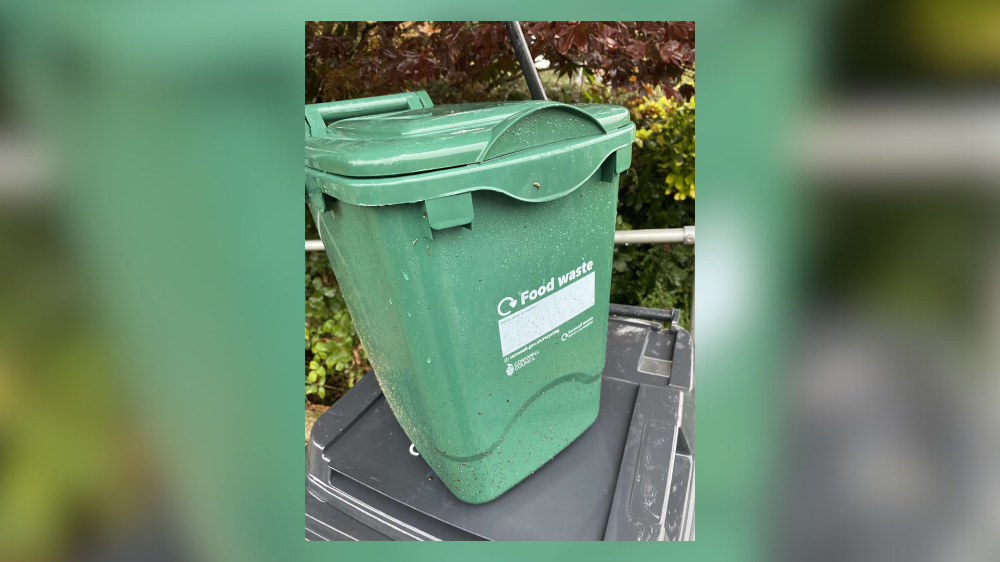
Weekly collections coming soon
A food waste service for Plymouth costing £4.2 million to implement over the next few years is expected to create an uplift in the city’s under performing recycling rate by up to eight per cent.
Around 37 per cent of the city’s waste is recycled – across the county the average is 55 per cent with many authorities already collecting food waste.
Weekly food waste collections will become law in April 2026 and in Plymouth they will be phased in from March to November with Devonport, Plympton, Plymstock, Southway, Stoke and Whitleigh the first communities to start.
Plymouth City Council’s cabinet will be asked to approve the business case for the roll out at its meeting next Monday (December 8).
Setting up costs have been met by a combination of the council’s revenue reserves, borrowing and grant funding from Defra. This has included ten new vehicles, food waste containers, staffing and an infrastructure upgrade of the council’s Prince Rock depot.
Defra has so far contributed £2.5 million towards the scheme but has as yet not confirmed ‘New Burdens’ funding which was expected in the summer for the ongoing costs of the project.
Provision has been made in the council’s medium term financial plan to meet an estimated funding gap of £500,000 a year from 2026/27.
The budget will be adjusted once government funding is announced, said the council.
Food waste collections will run alongside a wider plan to boost recycling rates including reintroducing the recycling officer role and increasing public engagement and targeted communications to target low participation and high contamination areas of the city.
Phase one of the roll out has been chosen to represent a diverse mix of property types, including varying levels of accessibility, socioeconomic conditions, flatted properties, and houses in multiple occupation (HMO).
Before the service begins, households will be provided with a small kitchen caddy to make separating your food waste from their rubbish easy, along with a roll of biodegradable liners and a larger outdoor caddy for storing food waste and putting it out for collection.
Some residents who live in flats, apartment blocks or houses of multiple occupation will be provided with a communal external bin, instead of individual outdoor caddies.
The households involved in the first phase of the roll out will all be contacted directly by post in the coming months with caddies delivered in advance of collections.
A report to cabinet says that the food waste collection service has been designed to align with existing collection days to avoid disruption to current waste services.
During phase one the project team and collection crew will have a dedicated period to address any collection anomalies, resident feedback, analyse trends and other emerging factors.
“This approach will enable the project team to gather valuable insights before progressing to subsequent phases. During the phased roll out the operations team will build up the number of drivers and crews focussing on recruiting, onboarding, and training crews and then building up to a full roll-out of the throughout the summer of 2026.”
Plymouth City Council recently said it wanted to increase the city’s household recycling rate to 53 per cent by 2030 and 65 per cent by 2034.
 Pothole damage claim for every seven miles of road
 Earlier kick-off for Devon derby
 Exeter Dryden Road consultation reopens
 Devon teenager charged after Somerset stabbing
 Two Plymouth towns set for major boost
 Could more Dartmoor car parks charge prices?